
Table of Contents
A permanent resident is a foreign national who comes to Canada and lives permanently.
Immigrating to Canada must be beneficial, relocating permanently to Canada is a costly and hard application, and the approval is a long and complicated process. Even though this process did not discourage people from applying, Canada welcomed hundreds of thousands every year, as the government of Canada planned to welcome around a half-million immigrants yearly. Also, Canada has the greatest immigration system worldwide.
When the Canadian government sets several streams and programs, is considered the economic benefits to the country, the Canadian families and the human rights.
All foreign nationals who wish to make Canada their permanent home must apply for and obtain a permanent resident visa. To get the visa, a foreign national must apply under a precise immigration program.
The regulations also require that all applications for permanent residence be made in writing; by completing several forms provided by the Canadian immigration department, together with all related and supporting documents, and paying applicable fees.
There are many immigration pathways that will enable a person to become a Canadian permanent resident, Family sponsorship programs, Express entry programs, Temporary resident to permanent resident, Start-up Visa Program, The Self-employed Persons Program, Caregivers, Rural and Northern Immigration Pilot, Atlantic Immigration Program, Refugees and humanitarian programs.
The Canadian permanent resident status brings a foreign national a step closer to becoming a Canadian citizen.
فئة العائلة
Canada welcomes more than 100,000 immigrants through family sponsorship each year, this policy is to facilitate family reunification. Your relatives can live, study and work in Canada if they become permanent residents of Canada. You can sponsor certain relatives to come to Canada if you are at least 18 years old and a: Canadian citizen, a person registered in Canada as an Indian under the Canadian Indian Act or a permanent resident of Canada.
Persons who may be sponsored include the following:
- Spouses, common law partners, and conjugal partners;
- Dependent children; Children intended for adoption;
- Parents, grandparents, and their dependent children;
- Brothers, sisters, nephews, nieces, and grandchildren who are orphaned, who are under 18, and who are not a spouse or common law partner; and
- Any relative, if the sponsor is alone in Canada without family members.
The Economic Class
Economic immigration helps ensure that Canada’s population and labour forces continue to grow. Canada has an ageing population and low fertility rates; such types of immigrants are usually younger than the Canadian-born population.
Canada’s current and future prosperity depends on recruiting immigrants to fill the gaps in the Canadian labour force, build or start businesses and invest in the Canadian economy. Economic immigrants include employees as well as employers. They mostly become permanent residents when they immigrate to Canada.
The economic categories are for applicants who have specific occupational skills and experience that meet the needs of Canada’s labour market and who will contribute to the Canadian economy.
The economic immigrants bring innovative, gifted and talented, investments and their family members to Canada, they bring also heritage and culture, which enrich the Canadian mosaic.
Technological progress, productivity and economic growth all benefit from the new immigrants. Studies show that they have little to no negative impacts on wages for other workers in the country.
In a global market, Canada is competing to attract talent. Other industrialized countries, like the United States, seek skilled immigrants.
Canada admits more highly skilled immigrants than it can quickly move into the workplace. Also, it takes time and money to immigrate and the processing times for applications are still quite long.
Economic immigration can be divided into two distinct processing streams: one for skilled workers, and the other for business immigration.
Permanent Residence (PR) Card and Renewal
You need a valid PR Card to return to Canada by plane, train, bus or boat. The PR card needs to be valid when you show it. If your card expires, you will have to apply for a new one. You are still a permanent resident if your card expires
If your permanent resident card (PR Card) is expired or will expire in less than 9 months, you can apply for a new card. The new card will have a new expiration date. Most new PR cards are valid for 5 years.
To be eligible for a PR card, you need to
- Be a permanent resident and
- Submit your application in Canada
- Free of conviction for any type of offence.
- Having proof of a lost or stolen PR card (if applicable).
- Not under an effective removal order.
Immigration of Canada doesn’t send PR cards to non-Canadian addresses and doesn’t allow third parties to get them for the applicant. The PR Card renewal process will take a minimum of 49 days and if required can be done quicker with urgent processing. A fee of $50 has to be paid for PR renewal. To pay for a renewal of the PR Card you must pay online and print the receipt to be attached to your application. The application must include a specified photo otherwise the application might be rejected.
The Application package.
The application package includes a guide and all the forms you need to complete to apply for a PR card. Include with your application:
- Your PR card:
If you are applying to renew your card, keep your current card and include a photocopy of it with your application.
If you are applying to replace a card because it is damaged or the information on it is wrong, send the card with your application.
- A clear copy of:
Your valid passport or travel document, or the passport or travel document you held at the time you became a permanent resident two photos that meet immigration photo specifications any other identity documents.
- A copy of the receipt for the processing fee, and a solemn declaration if your PR card was lost, stolen, destroyed or you didn’t receive it within 180 days of immigrating to Canada.
We can help you if you are not sure whether you met the PR residency obligation and are eligible for PR Card Renewal and need to learn more about the PR Card Renewal Process.
Canadian citizenship
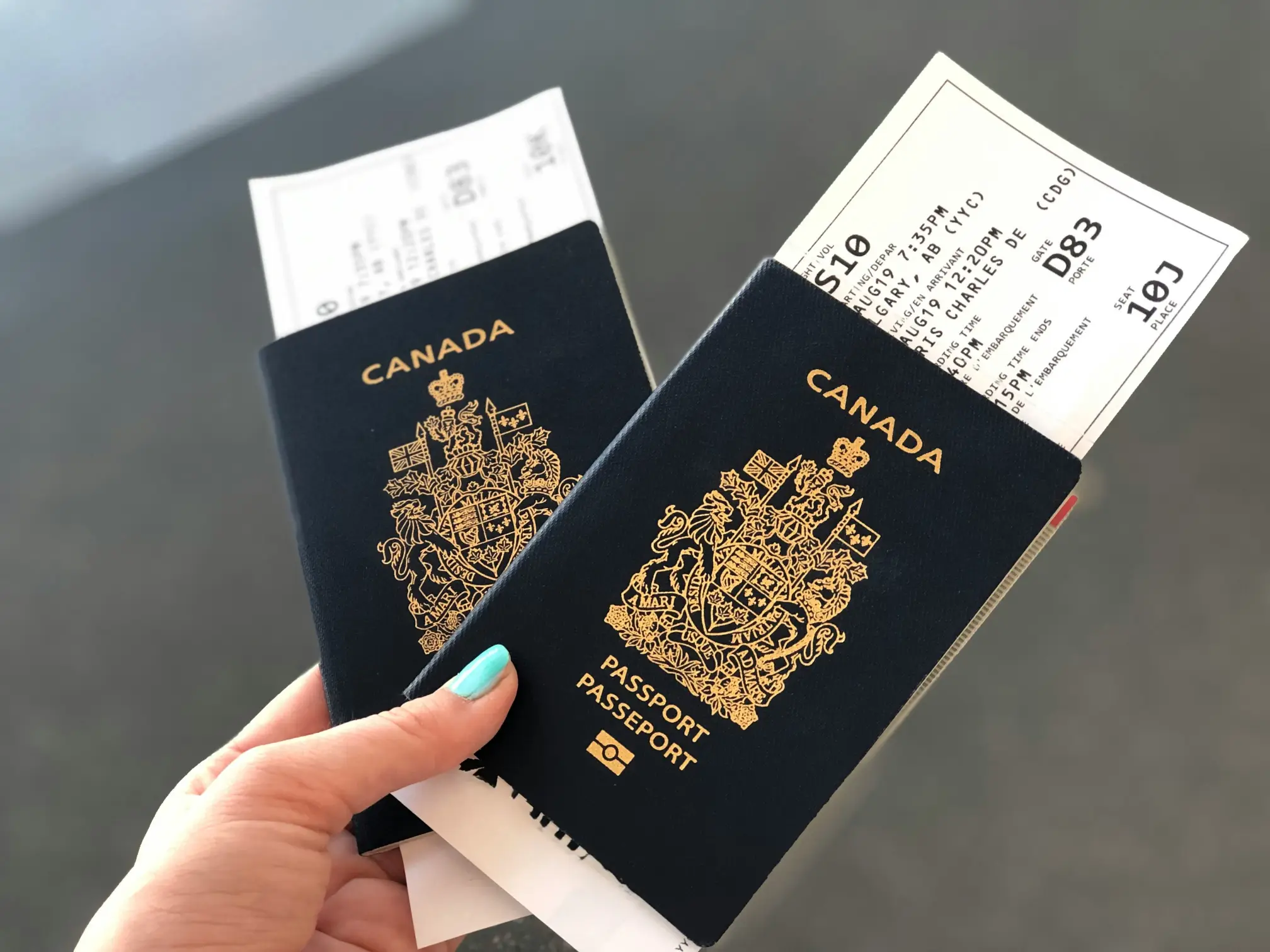
Canadian citizens hold a Canadian passport and vote in elections, such privileges are not enjoyed by permanent residents.
Canada allows dual citizenship, so those permanent residents who obtain Canadian citizenship can also keep their original citizenship. However, some countries won’t let you keep your citizenship if you become a Canadian citizen.
To become a Canadian citizen, most applicants must
- Be a permanent resident
- Have lived in Canada for a minimum of 3 out of the last 5 years (1,095 days)
- Have filed your taxes, you need to file taxes in Canada for at least 3 years during the 5 years right before the date you apply.
- Pass a citizenship test, between the age 18 to 54 years on the day you sign your application, you need to take the citizenship test which is 30 minutes long 20 questions (pass mark: 15 correct answers).
- Canada has two official languages: English and French. If you’re 18 to 54 years of age on the day you sign your application, you must show that you can speak and listen at a specific level in one of these languages. you need to meet the Canadian Language Benchmarks (CLB) Level 4 or higher.
- Prohibitions, if you committed a crime in or outside Canada you may not be eligible to become a Canadian citizen for a period of time. The time spent serving a term of imprisonment, on parole, or on probation doesn’t count as time you’ve lived in Canada.
- You are not Canadian until you attend the neutralizing ceremony and take the oath. Taking the Oath of Citizenship at a citizenship ceremony is your final step to becoming a Canadian citizen. Citizenship ceremonies take place across the country and at all times of the year.
Hearings and Appeals
Immigration Appeal Division
The Immigration Appeal Division (IAD) hears and decides appeals on immigration matters such as appeals from refused sponsorship applications and from removal orders.
Removal Order Appeals
In order to make a removal order appeal, you must have received a removal order and you are:
A permanent resident of Canada and lost your status, A foreign national with a permanent resident visa, or a Convention Refugee or Protected Person.
The Immigration Appeal Division (IAD) will request the appeal record from the Immigration Division or the Minister, the appeal record contains all the information related to the decision to issue a removal order against you. The Immigration Division or the Minister must provide the appeal record to you and the IAD within 45 days from the date requested.
In alternative dispute resolution, the IAD may suggest that your appeal be scheduled for an alternative dispute resolution (ADR) conference. It is suggested only for appropriate cases, and most removal order appeals are not appropriate. ADR is an informal meeting between you, the Minister’s Counsel, and an IAD officer to discuss the case, clarify the issues and encourage both sides to agree on a decision. If ADR is successful, there is no need for a hearing.
Residency Appeals
In this type of appeal, an immigration officer of Immigration, Refugees, and Citizenship Canada (IRCC) has decided that you did not comply with the residency obligation for permanent residents. This decision is made outside Canada. The law says that a permanent resident must be:
- “Physically present in Canada” at least 730 days in every five-year period, or
- “Physically present in Canada” or outside Canada for one of the allowable reasons set out under the law or its regulations, for a combined total of at least 730 days in every five-year period.
The date to start counting the 5 years is the date you asked for a travel document to come back to Canada.
If you believe that the officer’s decision was wrong because, during the five-year period in question, you did live in Canada for at least 730 days, you will have to demonstrate this by testimonies or documents. Gather documents and witnesses who can demonstrate that you were in Canada for the required time.
Misrepresentation Appeals
A ground of inadmissibility under the immigration refugee protection act IRPA that
involves misstating facts or withholding information.
A finding of misrepresentation on your immigration application may render you inadmissible to Canada. A result of this finding of inadmissibility can result in a 5-year ban from being able to immigrate or travel to Canada.
If the applicant provides false documents to the IRCC, lies or hides information (whether intentionally or mistakenly), it could be measured as misrepresentation. An applicant can hide information that could render them inadmissible such as a medical status or criminal record. Other familiar cases include applicants who use false travel documents or altered educational certificates.
That is why very important to have a legal adviser to lead you to the correct process to avoid risking misrepresentation. Hiring a representative in the form of an immigration consultant during the application process to make sure that your application has accurate, right and complete information that is supported by authentic documentation in order to avoid misrepresentation.
Sponsorship Appeals
A sponsorship application may be refused for various reasons including the genuineness of the relationship, you may want to appeal that decision to the Immigration Appeal Division (IAD) in order to explain why the visa application should be accepted. This is known as a sponsorship appeal
You are eligible to appeal to the IAD if you are a permanent resident or Canadian citizen who made an application to sponsor a family member to immigrate to Canada and the visa application was refused by Immigration, Refugees and Citizenship Canada, you have 30 days after receiving the refusal letter to appeal to the IAD.
You have the right to be represented at your hearing, at your own expense. The person representing you is called your counsel. If your counsel charges you money or any other form of payment, they must be a member in good standing of the College of Immigration and Citizenship Consultants (CICC). Or a provincial law society.
The IAD may suggest that your appeal be scheduled for an alternative dispute resolution (ADR) conference. It is suggested only for appropriate cases. (ADR) is an informal meeting between you, the Minister’s Counsel and an IAD officer to discuss the case, clarify the issues and encourage both sides to agree on a decision. If ADR is successful, there is no need for a hearing.
Processing pre-removal Risk assessment (PRRA)
Canada has both constitutional and international obligations which prevent you from being removed to a country where you would be in danger or at risk of persecution.
People in Canada under a removal order might have the opportunity to complete a Pre-Removal Risk Assessment (PRRA) before they are deported from Canada. The removal order against them becomes subject to a regulatory stay of removal.
Once the person is removal-ready, the CBSA issues a PRRA Notification, advising them that they are entitled to apply for a PRRA. The notice informs the person that they have 15 days in which to apply, plus an additional 15 days in which to provide written submissions in support of their application. The address to which everything must be sent is specified in the PRRA Notification package.
Evidence provided by previous refugee claimants is limited to that which arose after the rejection of their claim by the IRB or evidence that was not reasonably available or that the applicant could not reasonably have been expected in the circumstances to have presented to the IRB at the time of the rejection of the claim.
Outlined below are persons who cannot apply for PRRA. The exceptions generally relate to persons who already have protection or have other means of seeking protection.
- Protected persons and Convention refugees
- People subject to an authority to proceed under the Extradition Act
- Claimants coming from a safe third country
- Certain refugee claimants and previous PRRA applicants
